
Associate Professor of Information, Associate Professor of Electrical Engineering & Computer Science
2 Learning Experiences
Your browser is ancient!
Upgrade to a different browser to experience this site.
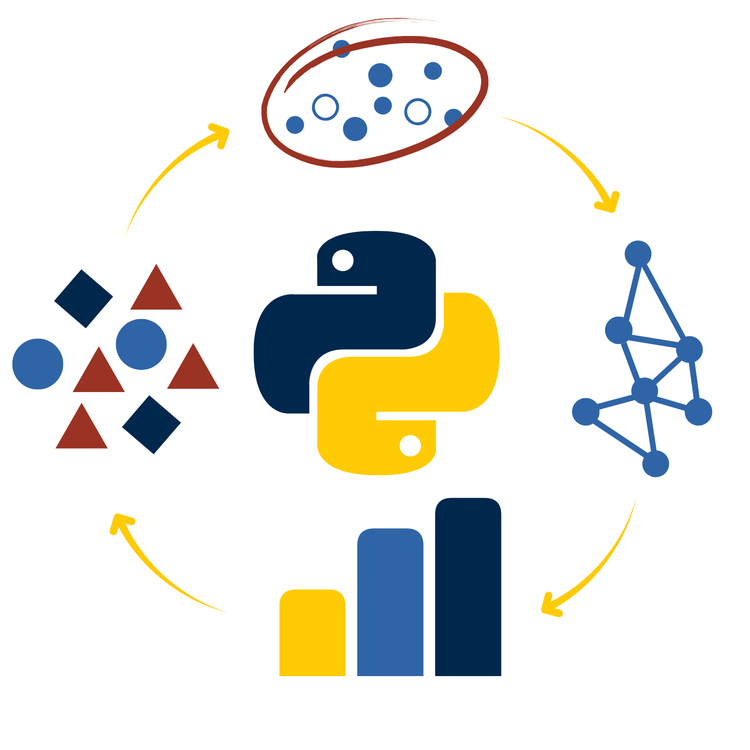
In our increasingly interconnected world, we’re collecting more raw data than ever. In “More Applied Data Science with Python,” you’ll learn how to extract and analyze complex data sets using Python. Practice using real-world data sets, like health data and comment sections, to develop visual representations and identify key patterns amongst populations. You’ll also learn to manage missing and messy data using advanced manipulation methods. Throughout this course series, you’ll build a foundation for advanced analytics and machine learning with the help of Scikit-Learn and NLP libraries by applying methods for data mining, clustering, topic modeling, network modeling, and information extraction. Upon completing the series, you'll have gained advanced data analysis skills that will help you gain insights into the datasets you're exploring.
Learners should have intermediate Python programming skills before enrolling in the Specialization. It is encouraged that you complete Applied Data Science with Python prior to beginning this Specialization.
Associate Professor of Information, Associate Professor of Electrical Engineering & Computer Science
2 Learning Experiences

Professor of Information, School of Information, Professor of Electrical Engineering and Computer Science, College of Engineering and Professor of Complex Systems, College of Literature, Science, and the Arts
2 Learning Experiences

Associate Professor of Learning Health Sciences, Medical School and Associate Professor of Information, School of Information
3 Learning Experiences
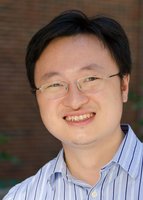
Associate Dean for Research and Innovation, Professor of Information, School of Information and Professor of Electrical Engineering and Computer Science, College of Engineering
1 Learning Experience
Course content developed by U-M faculty and managed by the university. Faculty titles and affiliations are updated periodically.
Advanced Level
Intermediate Python skills, knowledge of linear algebra and machine learning in Python, and have completed
Applied Data Science with Python.
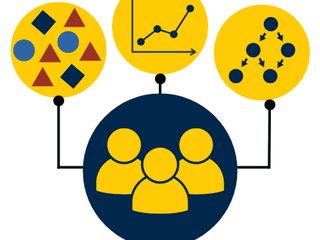
Learn to extract patterns from real-world datasets using data mining principles and Python for business and social insights.

Discover how to use unsupervised learning techniques to find patterns in data, including clustering, topic modeling, and dimensionality reduction.
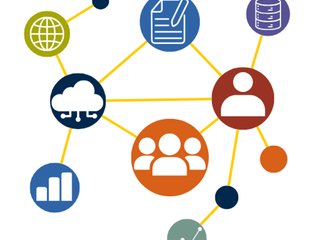
Use Python and NetworkX to analyze complex systems like epidemics and social media using network theory and diffusion models.
Use machine learning and NLP to extract meaningful patterns from free-text data, including names, locations, and complex real-world entities.
Each course in this series will help you build data analytics skills using Python and increase your understanding of the role of data in shaping decisions.
Qiaozhu Mei Professor of Information, Associate Dean for Research and Innovation, School of Information
