
Your browser is ancient!
Upgrade to a different browser to experience this site.
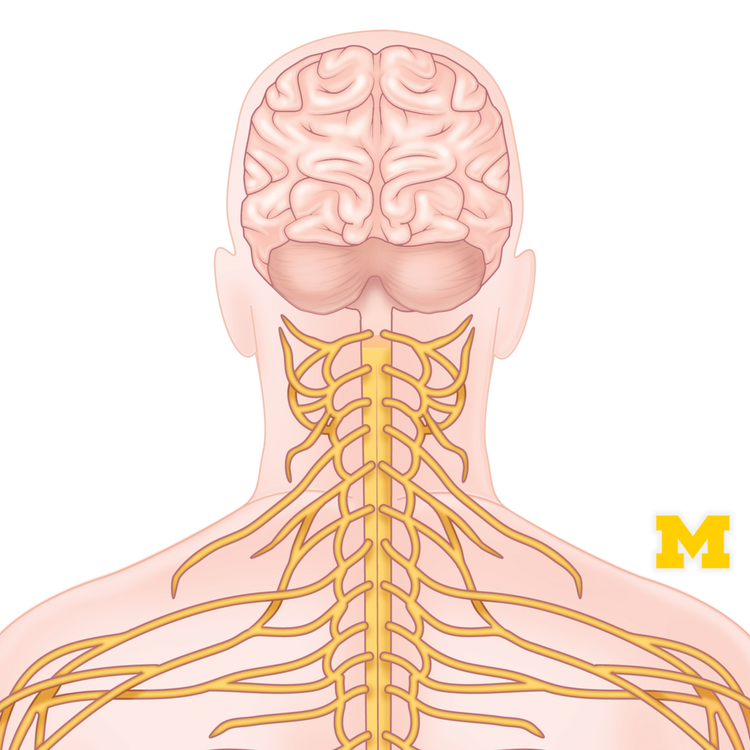
Human Neuroanatomy

What You'll Learn

  • Identify the components of the central and peripheral nervous systems.
  • Describe how sensory information reaches the brain and how motor commands are relayed to the muscles.
  • Understand the connections among components of the nervous system.
8 Modules
16 Hours
2 hrs per module (approx.)
Rating

About Human Neuroanatomy

By regulating communication, sensory input, and control, the nervous system plays a pivotal role in how we take in information, both voluntarily and involuntarily. Human Neuroanatomy provides an introduction to the central and peripheral nervous systems.

Topics include the gross anatomy of the nervous system, the spinal cord, spinal nerves and reflexes, the brainstem and cranial nerves, the autonomic nervous system, the cerebral cortex, the diencephalon, the limbic system, and the sensory and motor systems.

This is the third course in the Anatomy course series, an introduction to the major functions of the human body, from the musculoskeletal and nervous systems, to the function of the heart, lungs, and hormonal pathways.

Skills You'll Gain

  • Anatomy
  • Cranial Nerves
  • Neuroanatomy
  • Neurology
  • Neuroscience
  • Sensory Motor Skills

What You'll Earn

Certificate of Completion
Certificates of completion acknowledge knowledge acquired upon completion of a non-credit course or program.
Experience Type
100% Online
Format
Self-Paced
Series
Subject
  • Health
Platform
Coursera
Welcome Message

In this course, you will explore the anatomy and organization of the nervous system using a systems-based approach. Topics include the gross anatomy of the central and peripheral nervous systems, the spinal cord and spinal nerves, reflexes, the brainstem and cranial nerves, the autonomic nervous system, sensory and motor pathways, and major brain regions including the diencephalon, limbic system, and cerebral cortex. You will also examine how nervous system structures support communication, sensation, movement, and homeostasis. By the end of the course, you will have an anatomical foundation for future study of neuroanatomy and related health sciences.

This abbreviated syllabus description was created with the help of AI tools. The full syllabus is available to those who enroll in the course.

Course Schedule

Module 1: Welcome and Gross Anatomy of the Nervous System

  • Lesson 0: Welcome to Neuroanatomy
  • Reading: Course Introduction
  • Reading: Course Resources & Syllabus
  • Reading: Help Us Know More About You
  • Reading: Foundational Anatomy Content
  • Practice Assignment: Foundational Anatomy Content
  • Lesson 1: Introduction to the Nervous System
  • Video: Gross Anatomy of the Nervous System: Introduction (1)
  • Video: Gross Anatomy of the Nervous System: Introduction (2)
  • Lesson 2: CNS Gross Anatomy
  • Video: CNS Gross Anatomy: Cortical Lobes & Landmarks
  • Practice Assignment: Gross Anatomy Practice Quiz
  • Lesson 3: CNS Meninges
  • Video: CNS Gross Anatomy: Meninges, Dura Mater
  • Video: CNS Gross Anatomy: Meninges, Arachnoid and Pia Mater
  • Lesson 4: CNS Vasculature
  • Video: CNS Vasculature (1)
  • Video: CNS Vasculature (2)
  • Lesson 5: CNS Ventricular System
  • Video: CNS Ventricular System (1)
  • Video: CNS Ventricular System (2)
  • Practice Assignment: Vasculature and Ventricular Practice Quiz
  • Lesson 6: Neurohistology
  • Video: Neurohistology 1 (Neurons)
  • Video: Neurohistology 2 (Neuroglia)
  • Lesson 7: Neurodevelopment
  • Video: Neurodevelopment (1): Neurulation
  • Video: Neurodevelopment (2): Formation of the CNS
  • Video: Neurodevelopment (3): Neural Crest
  • Practice Assignment: Neurohistology and Neurodevelopment Quiz
  • Graded Assignment: Gross Anatomy Assessment
  • Reading: Preview of Modules 2–8

Module 2: Spinal Cord

  • Lesson 1: Spinal Cord (SC) Gross Anatomy
  • Video: Spinal Cord Gross Anatomy
  • Lesson 2: SC Gray & White Matter
  • Video: Gray & White Matter (1)
  • Video: Gray & White Matter (2)
  • Practice Assignment: Spinal Cord Gross Anatomy and Gray and White Matter Quiz
  • Lesson 3: Spinal Cord Peripheral Nerves
  • Video: Spinal Cord Peripheral Nerves (1)
  • Video: Spinal Cord Peripheral Nerves (2)
  • Video: Spinal Cord Peripheral Nerves (3)
  • Lesson 4: Spinal Cord Reflexes
  • Video: Spinal Cord Reflexes
  • Practice Assignment: Peripheral Nerves and Reflexes Quiz
  • Graded Assignment: Spinal Cord Assessment

Module 3: Motor Systems

  • Lesson 1: Motor Systems Introduction
  • Video: Motor Systems Introduction
  • Lesson 2: Motor Systems Direct
  • Video: Motor Systems Direct
  • Lesson 3: Motor Systems Indirect
  • Video: Motor Systems Indirect
  • Practice Assignment: Motor Systems Direct and Indirect Quiz
  • Lesson 4: Motor Systems Basal Nuclei
  • Video: Motor Systems Basal Nuclei
  • Video: Motor Systems Basal Nuclei Circuitry
  • Lesson 5: Motor Systems Cerebellum
  • Video: Motor Systems Cerebellum
  • Practice Assignment: Motor Systems Basal Nuclei and Cerebellum Quiz
  • Graded Assignment: Motor Systems Assessment

Module 4: Autonomics

  • Lesson 1: Autonomic Nervous System Introduction
  • Video: Autonomic Nervous System Introduction
  • Lesson 2: Sympathetic Nervous System
  • Video: Sympathetic Nervous System
  • Lesson 3: Parasympathetic Nervous System
  • Video: Parasympathetic Nervous System
  • Graded Assignment: Autonomics Assessment

Module 5: Sensory Systems

  • Lesson 1: Sensory Systems Introduction
  • Video: Sensory Systems Introduction
  • Lesson 2: Sensory Systems Gross Touch
  • Video: Sensory Systems Gross Touch
  • Lesson 3: Sensory Systems Fine Touch
  • Video: Sensory Systems Fine Touch
  • Graded Assignment: Sensory Systems Assessment

Module 6: Brain Stem & Cranial Nerves

  • Lesson 1: Brain Stem
  • Video: Brain Stem & Reticular Formation
  • Lesson 2: Cranial Nerves Introduction
  • Video: Cranial Nerves Introduction
  • Practice Assignment: Brain Stem Quiz
  • Lesson 3: Cranial Nerves Special Senses
  • Video: Cranial Nerves Special Senses
  • Lesson 4: Cranial Nerves Extraocular
  • Video: Cranial Nerves Extraocular
  • Lesson 5: Cranial Nerves Face
  • Video: Cranial Nerves Face
  • Lesson 6: Cranial Nerves Pharynx & Tongue
  • Video: Cranial Nerves Pharynx & Tongue
  • Lesson 7: Cranial Nerves Parasympathetic
  • Video: Cranial Nerves Parasympathetic
  • Practice Assignment: Cranial Nerves Quiz
  • Graded Assignment: Brain Stem and Cranial Nerves Assessment

Module 7: Special Senses

  • Lesson 1: Special Senses Introduction
  • Video: Special Senses Introduction
  • Lesson 2: Anatomy of the Ear
  • Video: Anatomy of the Ear
  • Video: Vestibular Static Equilibrium
  • Video: Vestibular Dynamic Equilibrium
  • Practice Assignment: Ear and Vestibular Quiz
  • Video: Auditory Cochlea Anatomy
  • Video: Auditory Pathways
  • Practice Assignment: Auditory Quiz
  • Lesson 3: Anatomy of the Eye
  • Video: Visual Eye Anatomy
  • Video: Visual Pathways
  • Practice Assignment: Visual Quiz
  • Graded Assignment: Special Senses Assessment

Module 8: Cortex

  • Lesson 1: Cerebral Cortex Introduction
  • Video: Cerebral Cortex Introduction
  • Lesson 2: Subcortical White Matter
  • Video: Subcortical White Matter
  • Lesson 3: Diencephalon
  • Video: Thalamus
  • Video: Hypothalamus
  • Lesson 4: Limbic System
  • Video: Limbic System
  • Lesson 5: Hippocampal Formation
  • Video: Hippocampal Formation
  • Lesson 6: Amygdala
  • Video: Amygdala
  • Graded Assignment: Cortex Assessment

Course Wrap-Up

  • Reading: Post-Course Survey
  • Reading: Keep Learning with Michigan Online
Grading Policy

Course materials and assignments are available for self-paced learning. To pass the course and earn the certificate, you must achieve an overall grade of 80% or higher.

The course includes eight graded quizzes totaling 70 questions. Together, these questions account for 100% of the course grade. Each quiz is weighted according to the number of questions it contains.

Course content developed by U-M faculty and managed by the university. Faculty titles and affiliations are updated periodically.

Beginner Level

No prior experience required

Enrollment Options

Individuals

This experience is available to individual learners on the following platforms:

U-M Community

Free access is only available to current U-M students, alumni, faculty, and staff.

Organizations

Special pricing and tailored programming available for organizational partners.

What are Coursera and edX?

Michigan Online learning experiences may be hosted on one or more learning platforms. Platform features may vary, including payment models, social communities, and learner support.

Coursera

  • Hosts online courses, series, and Teach-Outs from Michigan Online
  • Enroll and preview courses anytime
  • May earn a non-credit certificate from Coursera

edX

  • Hosts online courses and series from Michigan Online
  • Many offer a free (limited) audit option
  • May earn a non-credit certificate from edX

For more information visit the What are Coursera and edX? FAQ section

Reviews and Ratings

4.9

788 Ratings from Coursera

Most Recent Reviews

Read all reviews
<co-content><text>I am attending another course and I already miss Dr. Kelli. She was amazing!</text></co-content>
<co-content><text>What a great course. It was well formatted and very understandable . Thank you</text></co-content>
there were some mistakes in the recordings but I was a good refresher!
FANTASTIC
j
very difficult to understand the teacher... the slides are written in confusing way, that helps her but not the students. it is interesting but not very clear and I usually have to go over the video again and again.
Too many quizzes.
Great content, but I didn't like the fact that the diagrams and cadaveric images were not labelled. It made the course unnecessarily more complex, particularly when compared to the other courses in this specialization.

Michigan Online
For You

Sign up for a Michigan Online account to customize your experience!